
Behind ECA Week 2026: All Clothing Is Handmade
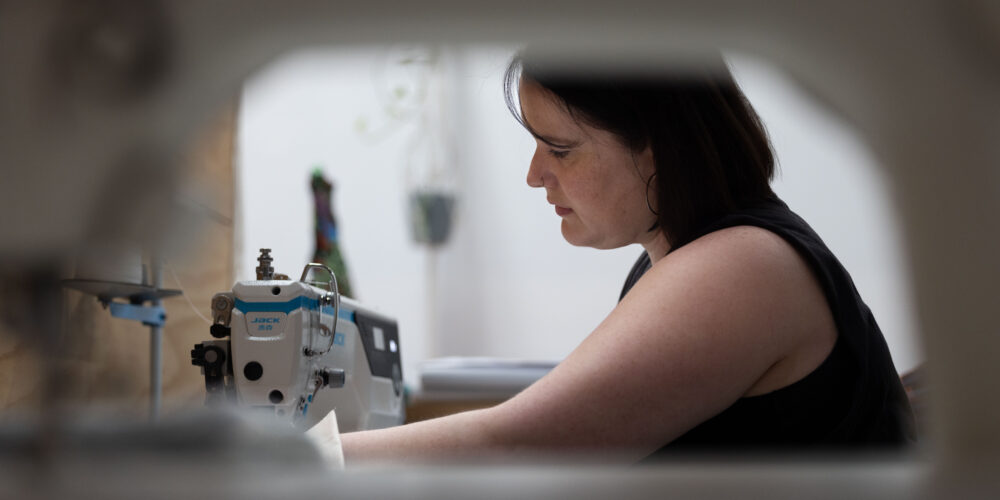
Did you know Ethical Clothing Australia Week is the only event of its kind in Australia dedicated to celebrating the skilled local workers behind the country's textile, clothing and footwear (TCF) industry? Now in its sixth year, Ethical Clothing Australia Week 2026 zeroes in on a simple, but powerful idea: all clothing is handmade.
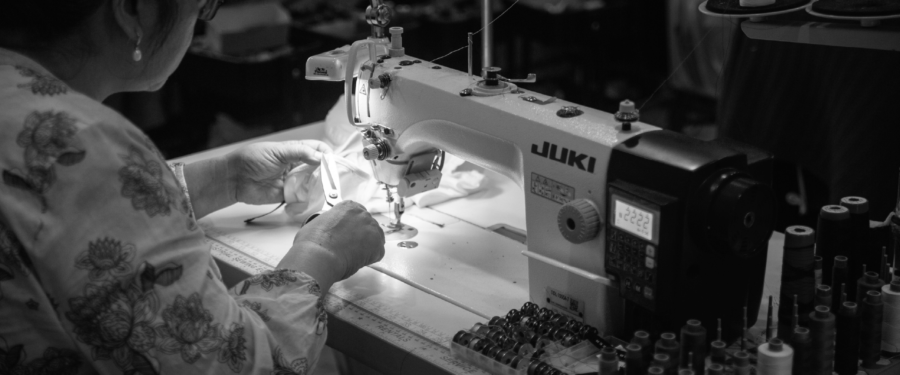
We don’t mean every garment is stitched entirely by hand from start to finish. Rather, every piece of clothing, every uniform and every pair of shoes still depends on human skill, human labour and human decision-making at every single stage of production. Machines might help along the way, but they do not and cannot replace the people whose knowledge and hands bring a product to life.
What “handmade” really means
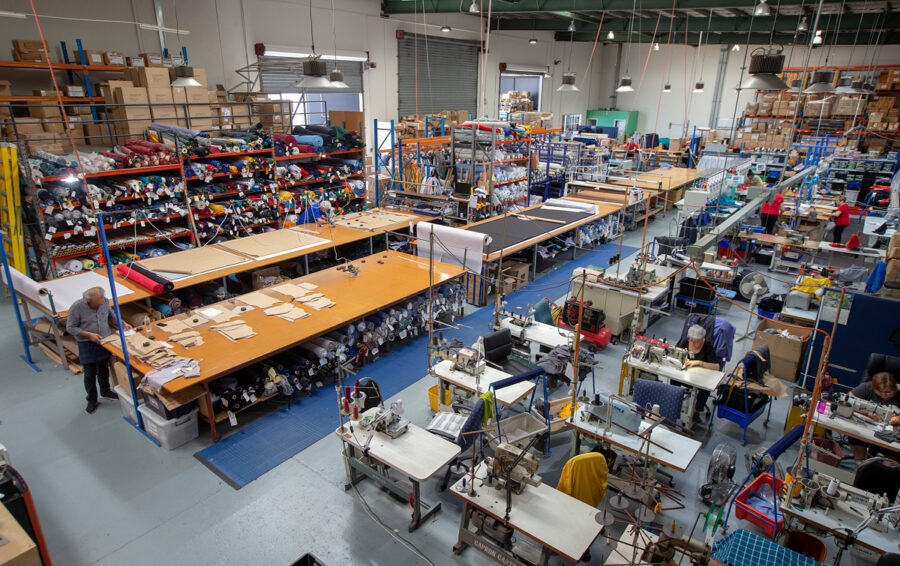
Behind every finished item is a person, and often many people. Someone designs it. Someone develops the pattern. Someone cuts the fabric. Someone sews or assembles it. Someone adds the trims or prints. Someone checks the quality. Someone prepares it for dispatch.
Whether it’s clothing, workwear, PPE or footwear, every TCF product depends on this chain of human effort. Recognising the people behind that chain, not just the finished product, is at the heart of ethical manufacturing. This is the core message of Ethical Clothing Australia Week: All clothing is handmade. The question is, by who and in what conditions.
“We want Australians to look twice at where their clothing comes from and to recognise the businesses that treat workers as an asset rather than a cost.” – Angela Bell, Ethical Clothing Australia Interim National Manager
A high-risk industry for modern slavery
The Australian Government has named textiles a high-risk industry in every one of its five Modern Slavery Statements from 2019 to 2024.
Two of the key reasons the sector remains especially vulnerable includes:
– Gender exploitation: A large proportion of garment workers globally are women working in environments with weak labour protections. According to a 2021 report by Ernst & Young and Australian Fashion Council, the Australian TCF manufacturing and fashion industry is heavily gendered, with approximately 77% identifying as female.
– Low visibility: Extensive subcontracting makes it difficult for both governments and major brands to track working conditions beyond the first tier of garment assembly. In fact, the clothing and footwear manufacturing sector is widely believed to have the greatest proportion of outworkers.
The Hidden Workforce: Outworkers
Outworkers are people who conduct their work outside of a factory or formal work environment. They usually work from home, or at a location not normally classified as a business premises (for example, a garage attached to residential premises). Due to the hidden nature of this kind of work, it’s hard to determine the exact number of outworkers in Australia. In addition, traditional ABS Census data sets misclassify outworkers as non-employees, which obscures the true scale of the industry.
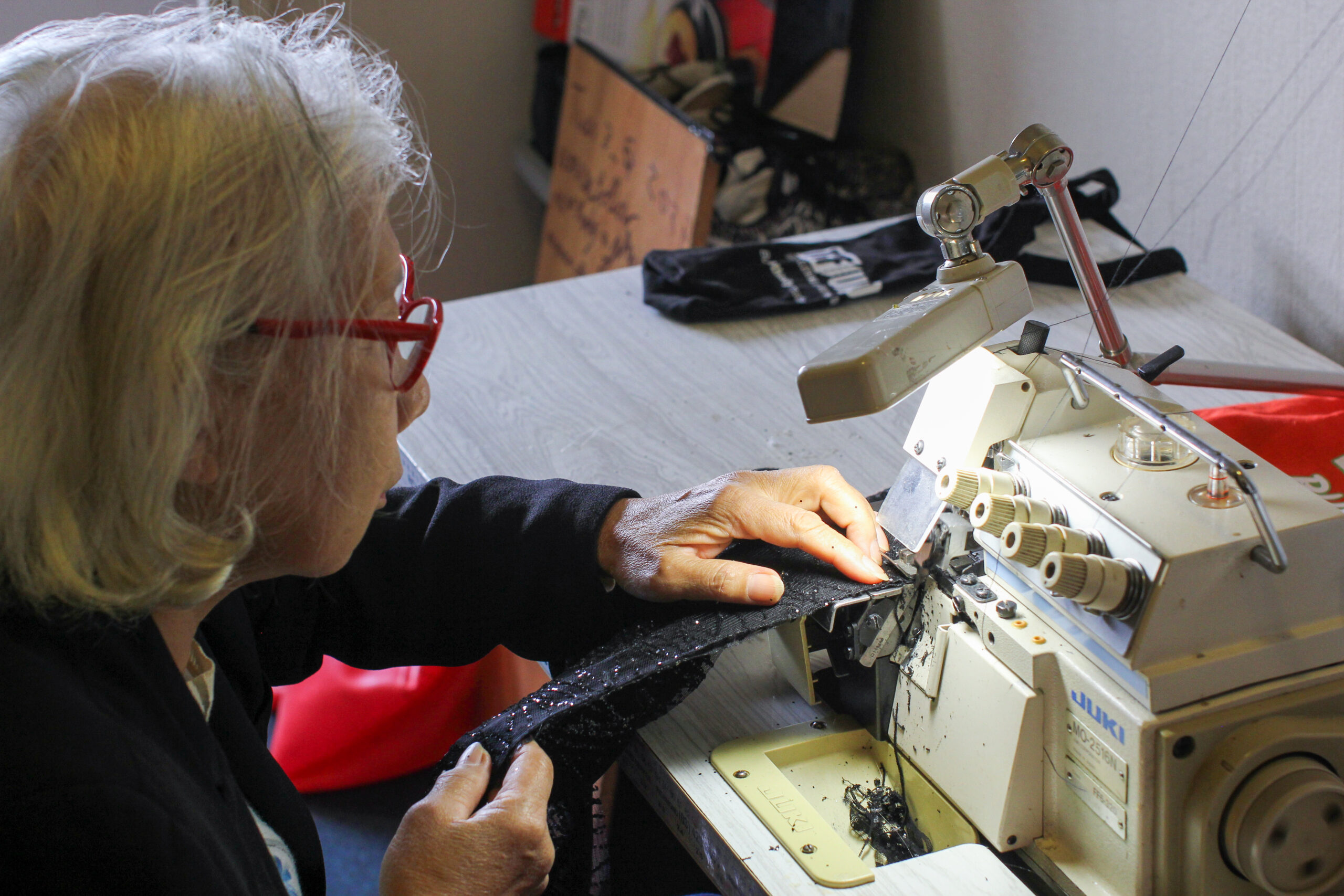
Many outworkers in Australia are migrant women who come from non-English speaking backgrounds and often do not understand their rights as Australian workers. They often experience unethical working conditions and unreasonable expectations such as:
– Long working hours
– Not receiving the legal award rate of pay
– Being paid by piece which places a significant amount of pressure – to work extensive hours and produce more garments
– Irregular work and insecure income
– Poor working conditions, which can lead to work-related injuries
– May not receive their lawful industrial entitlements, such as paid annual leave, personal leave and superannuation
“I [was] scared to lose my job. I close[d] my door and I decided not to speak up. I think many other people out there [are] the same as me.” – Outworker, New South Wales
There is a widespread reluctance from outworkers to speak up about these issues, due to the fear of losing work. Such concerns are exacerbated by the low incomes that many outworkers live on. While some workers may prefer to work from home because it enables them to generate an income while meeting family responsibilities, some outworkers struggle to get work elsewhere and have little choice but to work from home at rates set by the business.
Outworkers face a heightened risk of exploitation, driven by three overlapping factors: the demographic profile of the workforce, the environments in which they work and the sheer complexity of the supply chains they sit within.
This creates what can be described as a triple invisibility:
1. Spatially: Outworkers often work in private, unregulated spaces like their own homes.
2. Politically: Isolation prevents them from organising or having a collective voice.
3. Economically: Their labour is not properly recorded or recognised as formal employment.
What Ethical Clothing Australia does
Ethical Clothing Australia works directly with local TCF businesses to protect and uphold the rights of Australian garment workers. To become Ethical Clothing Australia accredited, a business’s entire manufacturing operation is audited. This is undertaken by the TCF Union and ensures that local workers, including outworkers, are paid correctly, receiving their full legal entitlements and working in safe conditions. When a business is accredited with Ethical Clothing Australia, they’ve demonstrated their local supply chain is compliant, ethical and transparent from design to dispatch.
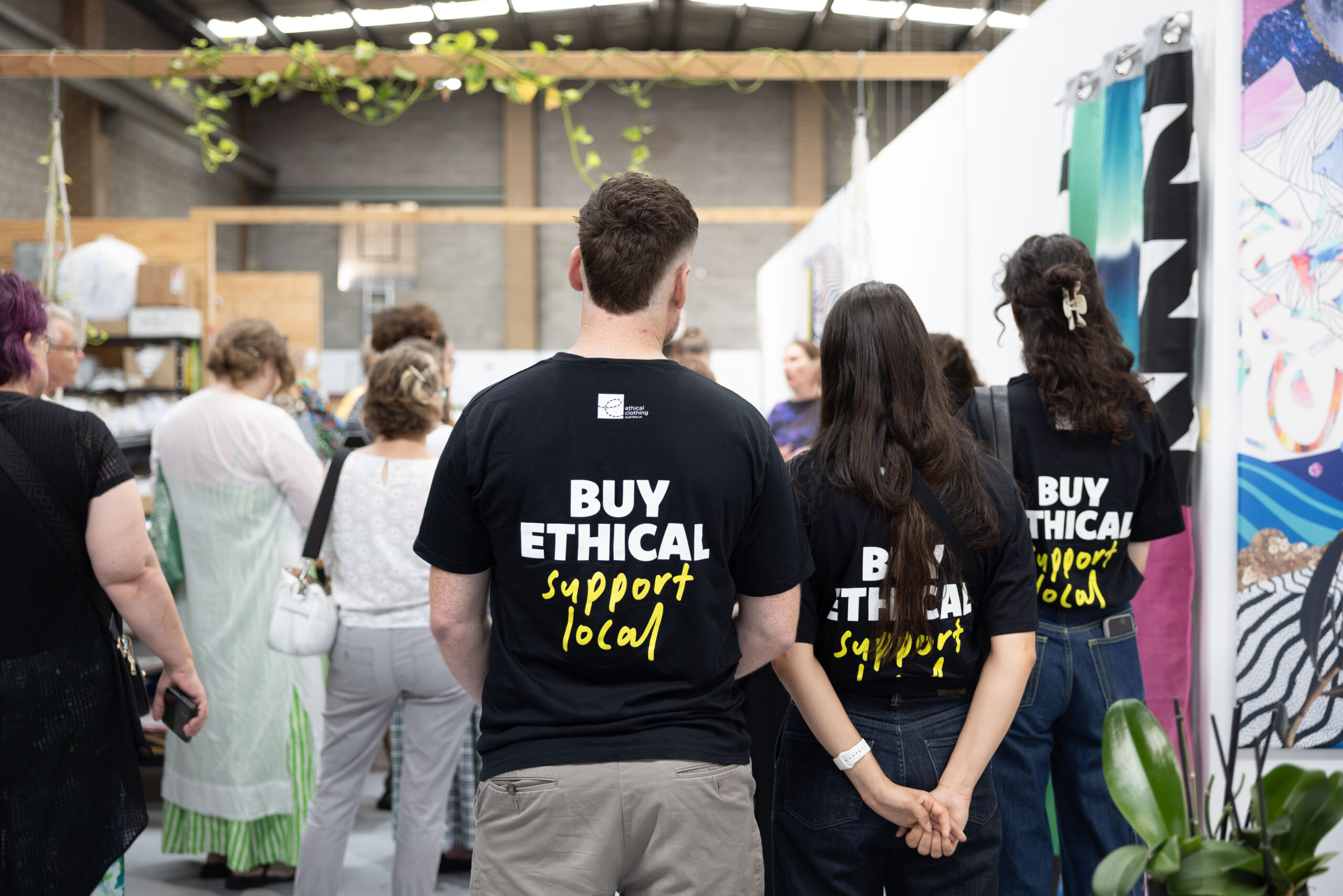
“Union engagement is really vital to the Ethical Clothing Australia accreditation program because it’s the union having the contact with the workers and doing the audits to make sure that the workers are working in transparent and ethical supply chains, and it’s the relationship with the union that allows the workers to have their voice.” – Jenny Kruschel, Timber, Furnishing & Textiles Union (TFTU)
Why this matters now
97% of Australia’s clothing and textile products are manufactured offshore. This statistic underscores just how much of our TCF industry now operates through increasingly complex supply chains. In a rapidly changing world driven by automation and offshoring, Ethical Clothing Australia Week is a reminder that the skill and craft of local textile workers can’t be replaced. Every TCF product, wherever it’s made, depends on people.
Ethical Clothing Australia Week 2026 runs from 10 to 20 September, and celebrates the skilled workers shaping Australia’s local and ethical textile, clothing and footwear industry. Join us for live events, a series of co-hosted webinars, and events run by our accredited businesses themselves. View the full event program here.
Related articles
Explore more insights, updates and stories from across Australia’s ethical and local manufacturing industry.
Contact us to get accredited
Support local


Ethical Clothing Australia acknowledges the Traditional Custodians of Country throughout the lands now known as Australia and recognise and celebrate their connections to land, sea and community. We pay our respect to Elders past and present and extend that respect to all Aboriginal and Torres Strait Islander Peoples today.We are a place free from discrimination, where diversity is celebrated and everyone belongs. We are committed to creating a safe and welcoming space for all.